
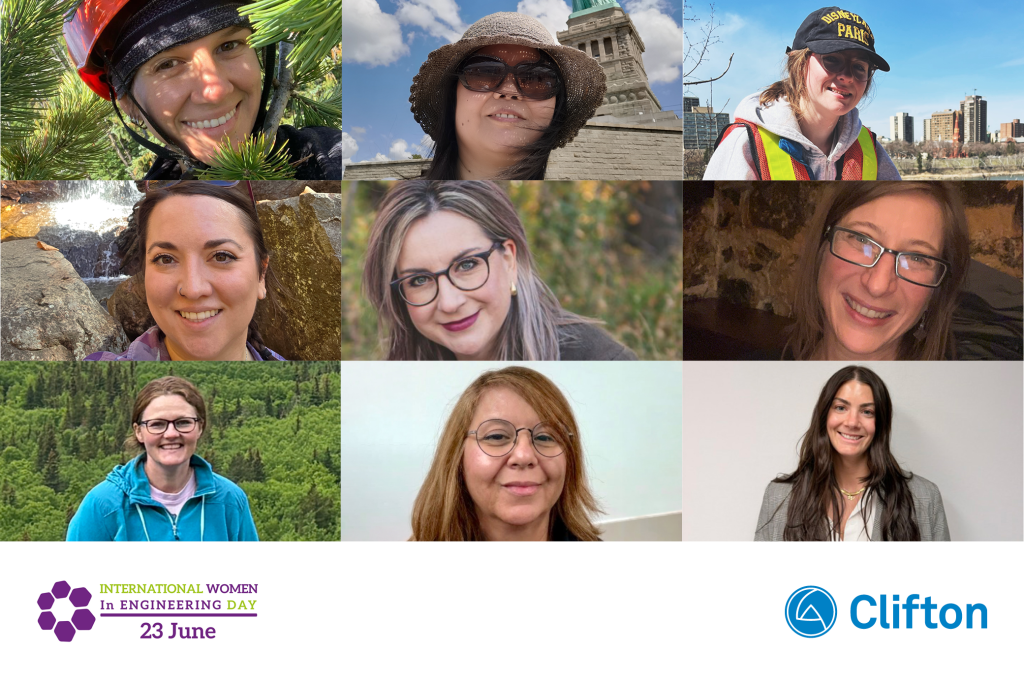
At Clifton, we believe that diverse perspectives drive innovation and lead to stronger solutions. We’re proud to support women in engineering and recognize the important contributions they make across our projects, teams, and communities.
This year’s International Women in Engineering Day theme, Engineering Intelligence, celebrates the expertise, creativity, and leadership women bring to engineering every day. Today, we’re recognizing the engineers, scientists, technicians, and technologists at Clifton who are helping solve complex challenges and shape the future of our industry.
Read below to hear directly from some of the women at Clifton as they share their experiences, accomplishments, and perspectives on working in STEM.
Ana Marçal, MSc PBiol RPBio – Biologist
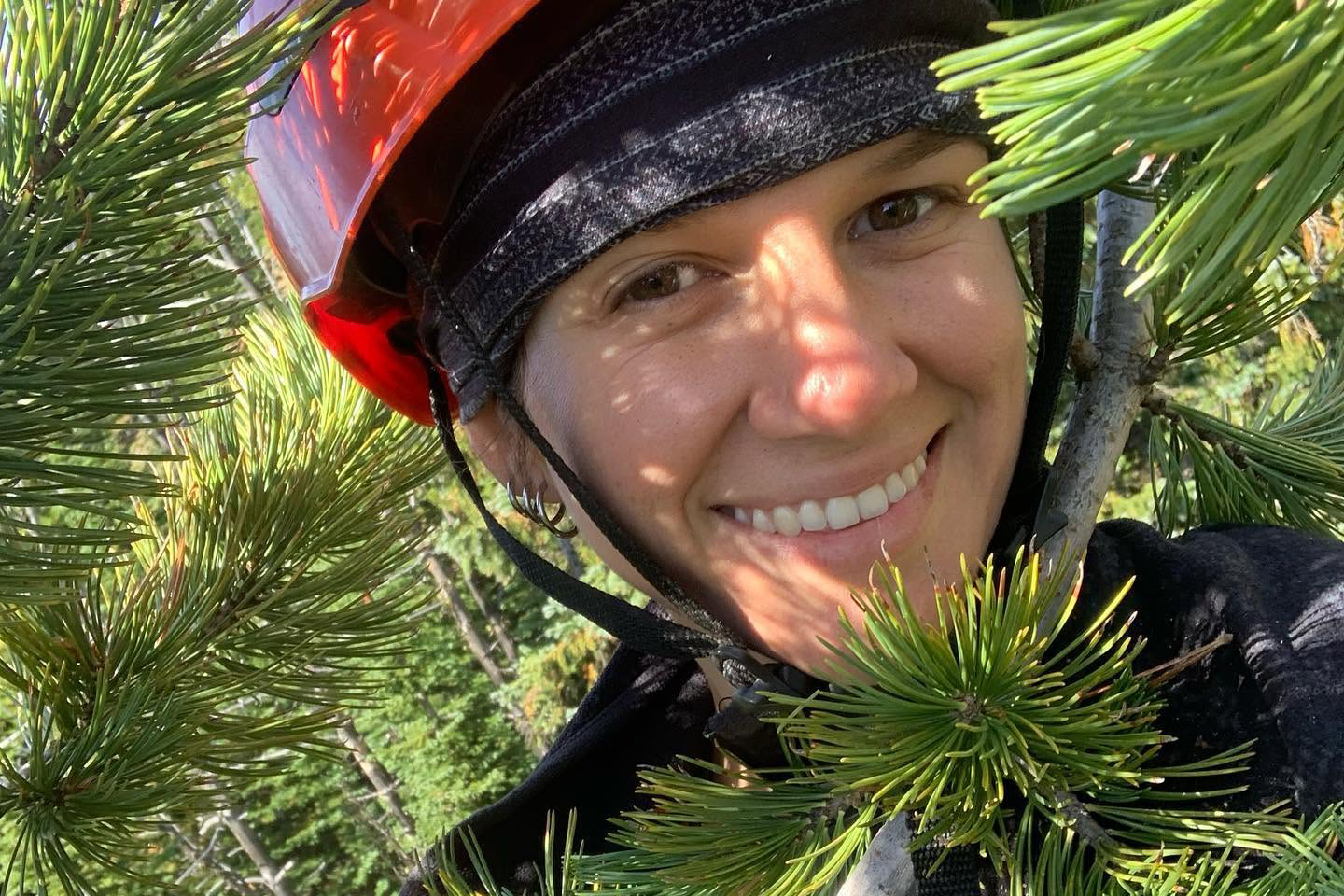
- What do you do?
I am a biologist working in environmental consulting, primarily supporting projects in the civil engineering and energy sector. My work combines field biology, environmental assessments, project management, regulatory compliance, and mentoring junior staff to help balance responsible development with environmental stewardship. - Why did you choose a career in STEM?
I have always been passionate about nature and curious about how the world works. Science gave me a way to turn that curiosity into action and contribute to solutions that benefit both people and the environment. - What do you love or what inspires you about your field?
I have always been passionate about nature and curious about how the world works. Science gave me a way to turn that curiosity into action and contribute to solutions that benefit both people and the environment. - What has been the highlight of your career?
One of the most rewarding moments in my career was leading a large-scale Whitebark Pine inventory and transforming the resulting dataset into opportunities for innovation. By identifying new ways to analyze the data and applying statistical approaches to improve restoration methods, we were able to support species recovery efforts while reducing implementation costs. It was a powerful example of how scientific thinking can create value for both conservation and industry. - What do you look forward to in your career?
I look forward to continuing to bridge the gap between science, conservation, and industry. There are still many opportunities to develop innovative approaches that improve environmental outcomes while supporting sustainable development. I am also excited about mentoring the next generation of scientists and helping create environments where diverse perspectives and ideas can thrive. - What do you hope for the future of STEM?
I hope STEM becomes increasingly collaborative, inclusive, and solution-oriented. Many of the world’s biggest challenges (such as biodiversity loss, climate change, and sustainable resource management) cannot be solved by a single discipline. I would like to see greater integration between science, technology, policy, industry, and communities, allowing knowledge to be translated into practical actions. - Can you share an example of a project or accomplishment that you are particularly proud of?
One project I am especially proud of involved developing and implementing a natural forest regeneration strategy that leveraged the ecological role of Clark’s nutcracker to support the recovery of Whitebark Pine, an endangered species. Drawing on my background in tropical ecology and animal-mediated seed dispersal, I helped apply ecological principles to a practical conservation challenge during the implementation of a Species at Risk Act permit.
The approach reduced reliance on traditional tree-planting methods, lowering costs and reducing carbon emissions while supporting natural ecosystem processes. What makes this project particularly meaningful to me is that it demonstrated how understanding ecological interactions can create solutions that benefit conservation and industry at the same time. - What challenges have you faced as a woman in STEM, and how have you overcome them?
Working in environmental consulting often means operating in environments that have historically been male-dominated, particularly in construction and industrial settings. One challenge I have encountered is having my expertise or authority questioned more readily than that of my male colleagues. There have also been situations where professional interactions crossed boundaries and created uncomfortable or unsafe environments.
Overcoming these challenges has required confidence, resilience, and courage. Courage to speak up, courage to establish boundaries, and courage to lead even when others may not initially recognize your expertise. Throughout my career, I have learned the importance of advocating for myself, supporting other women in the field, and helping create workplaces where professionalism, respect, and inclusion are the norm. - What advice would you give to young women and girls interested in pursuing a career in STEM?
Do not let anyone define what you are capable of achieving. STEM needs diverse perspectives, creative thinkers, and people who are willing to ask questions and challenge assumptions. There may be moments when you feel underestimated or out of place, but your knowledge, skills, and ideas are valuable.
Be curious, keep learning, and do not be afraid to take up space. Confidence often grows through experience, not before it. Most importantly, pursue work that genuinely excites you. Passion and perseverance can take you much further than you imagine. - How do you stay motivated and passionate about your work in STEM?
I stay motivated by remembering why I entered this field in the first place: a deep appreciation for nature and a desire to contribute to its conservation. Every project presents an opportunity to learn something new and apply science to real-world challenges. - Who has been a significant mentor or role model for you in your STEM journey, and why?
My greatest inspiration has always been Jane Goodall. Her courage to immerse herself in the natural world, her determination to pursue science at a time when opportunities for women were far more limited, and her lifelong commitment to conservation have always resonated with me.
What inspires me most is not only her scientific contributions but also her unwavering sense of purpose. She has spent decades advocating for wildlife and environmental stewardship, demonstrating that science can be a powerful force for positive change. Her example reminds me that a meaningful career is about more than professional achievements; it is about having a cause you believe in and dedicating yourself to making a difference.
Cindy Cai, MEng PEng – Senior Civil Engineer
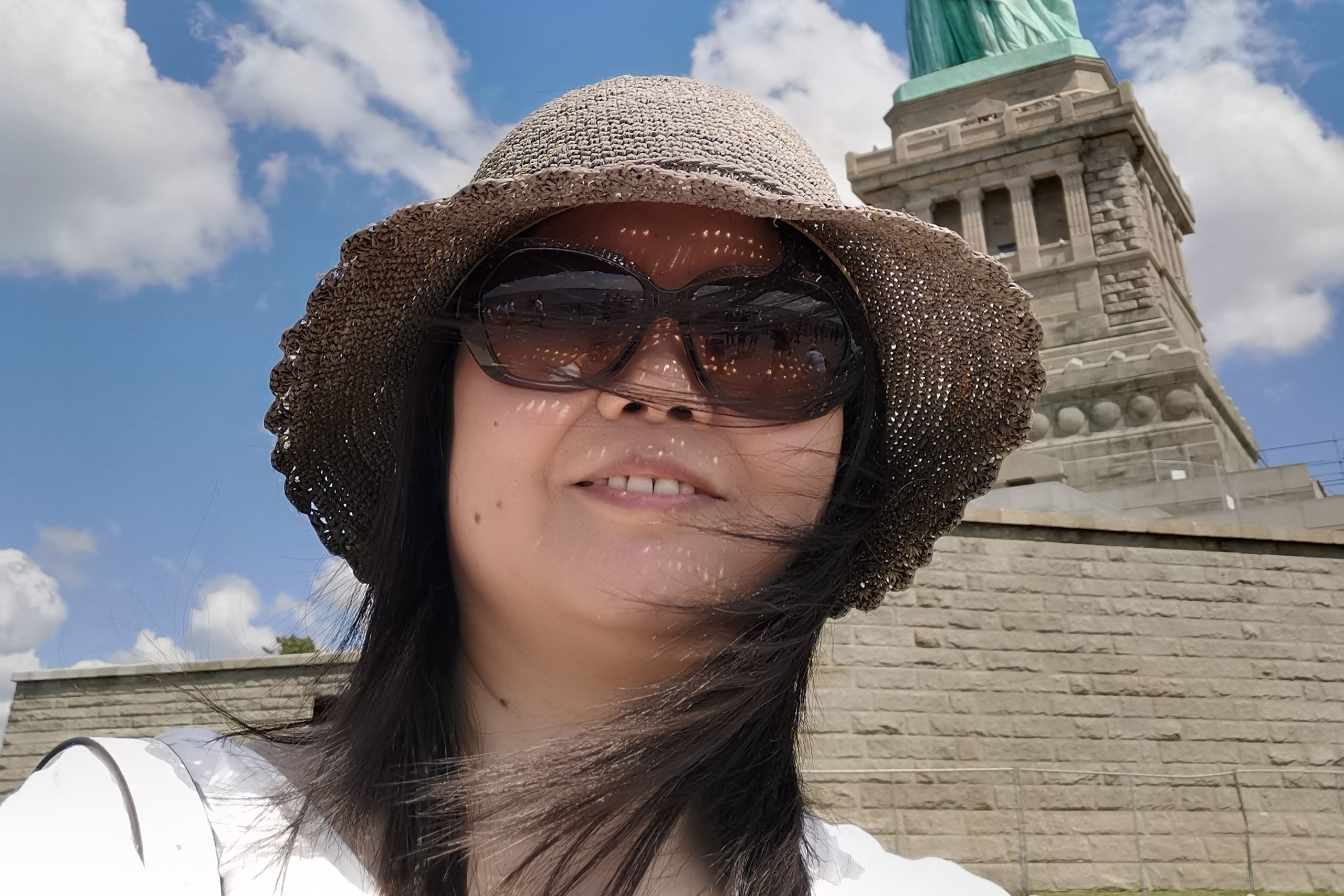
- What do you do?
I practice in the field of civil design engineering, with a focus on geometric railway and road design, underground utilities design, site grading, and drainage design. - Why did you choose a career in STEM?
My parents were both engineers. Because I was good at math and science from a young age, I chose engineering as my career, just like them. - What do you love or what inspires you about your field?
Problem-solving. There are many methods and approaches. Finding a solution that is both cost-effective and meets all requirements and limitations (such as site constraints, ease of construction, operation, and maintenance) is a very interesting endeavour. - What has been the highlight of your career?
There have been many, from completing project designs in a short time to helping clients solve problems. Through these efforts, I have earned the trust of my colleagues and clients. - What do you look forward to in your career?
Continuing to work on projects of all sizes and participating more in large-scale engineering projects. - What do you hope for the future of STEM?
The application of AI, virtual reality, and augmented reality technologies will enhance learning experiences and make complex concepts easier to understand. - Can you share an example of a project or accomplishment that you are particularly proud of?
In 2025, our design team completed the detailed design of the first phase of the Sturgeon West project, which included 51 tracks, in just two months. Within that short timeframe, I independently completed all track modelling and quantity calculations, ensuring the project was completed on time. - What challenges have you faced as a woman in STEM, and how have you overcome them?
Gender inequities remain at all levels of practice in STEM. As a woman, I consistently provide clear, detailed, and well-organized work that is not easily overlooked. - What advice would you give to young women and girls interested in pursuing a career in STEM?
Improve your skills, build confidence, and believe that you can do everything that others can do. - How do you stay motivated and passionate about your work in STEM?
Continuously learn new things and new knowledge, maintain my innovative capabilities, and keep pace with the times. - Who has been a significant mentor or role model for you in your STEM journey, and why?
I have learned a lot from many colleagues and senior engineers. I’m very grateful to anyone who takes the time to coach or share their knowledge and experience.
Frances Trotter – Geoscientist-in-Training
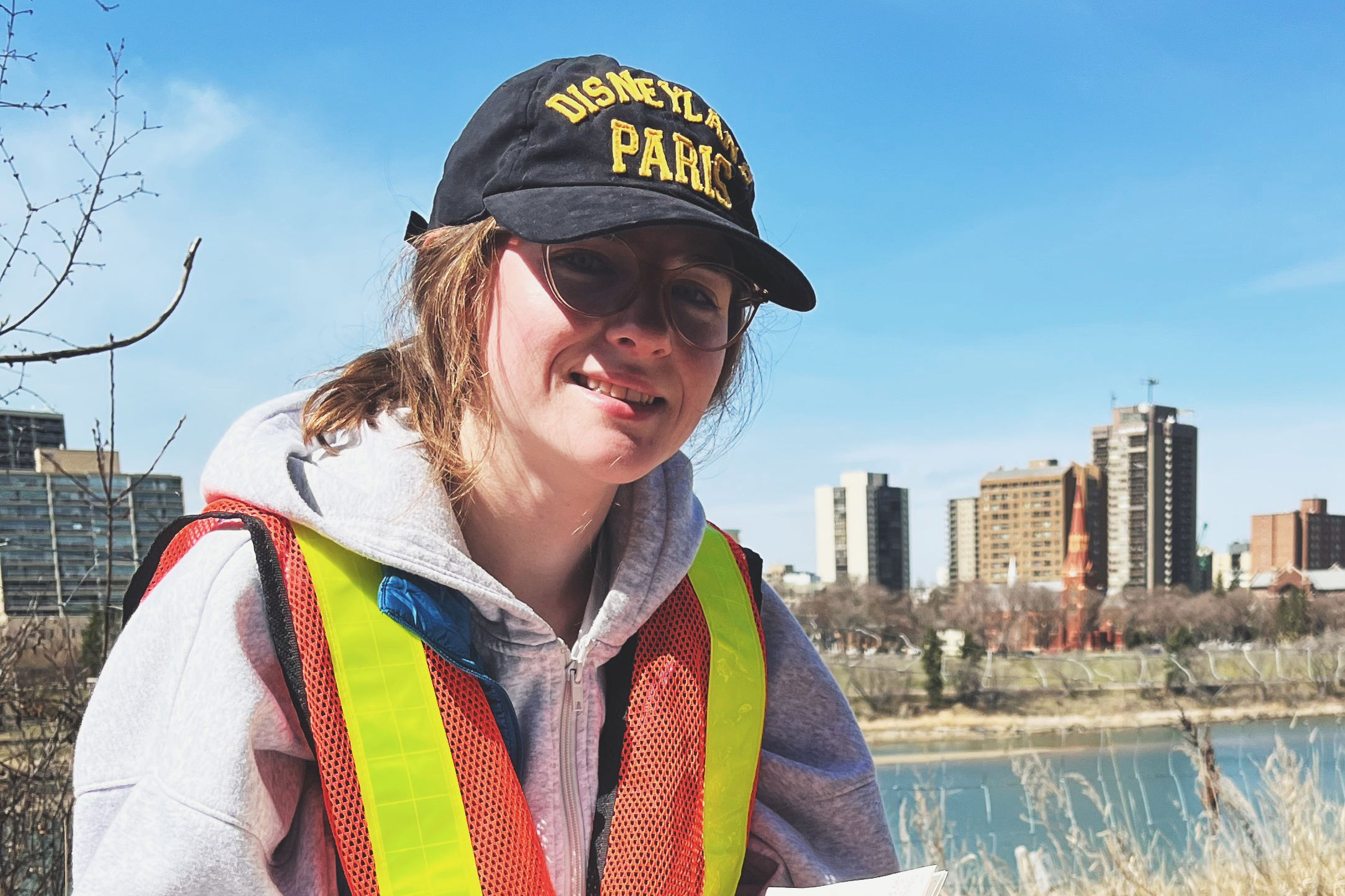
- What do you do?
Geoscientist-in-Training who works in the Water Sciences department. - Why did you choose a career in STEM?
I really enjoyed science classes in school, specifically Geology, Ecology, Physics, and Chemistry. My favourite topics were how Earth was formed and what processes create what we see today. I just wanted to keep learning more as I continued through school. - What do you love or what inspires you about your field?
I have always loved being in nature and observing how the natural world works. I love constantly learning, and this field allows me to learn more about the connectivity of everything in this world. - What has been the highlight of your career?
Gaining knowledge in fields not many people have, being able to pass on that knowledge to those willing to learn, and meeting people I may never have met without being in this career. - What do you look forward to in your career?
Continuing my education by working on more projects. There is always a learning opportunity. - What do you hope for the future of STEM?
I hope that more women enter the STEM industry and that we continue advancing the industry. - Can you share an example of a project or accomplishment that you are particularly proud of?
The Reford II project, which is still ongoing, has been an accomplishment I am really proud of. Drilling into a 75-79 million-year-old formation really opened my eyes to what is beneath my feet. The colours of the silts in that project were something I had never seen before. Bringing up water from that formation was really interesting, as I was able to touch geologic history. - What challenges have you faced as a woman in STEM, and how have you overcome them?
When I started my career, I struggled a lot with the thought that I was not taken seriously on site. Being 5 ft 2 in, I used to come across as timid and reserved. Now I am confident in my education and my knowledge. It is still a struggle when meeting new contractors, but I remind myself that I know what I am doing and that I deserve to be in this position. - What advice would you give to young women and girls interested in pursuing a career in STEM?
Never stop learning, be confident in your education, and know that you deserve to be in these spaces. Your education and opinion are extremely valuable in the STEM industry. - How do you stay motivated and passionate about your work in STEM?
Knowing that in this career I will always have the opportunity to advance my education really keeps me motivated for “what’s next.” - Who has been a significant mentor or role model for you in your STEM journey, and why?
My parents have always encouraged me to pursue a career in science.
My mother would buy me various children’s science books on dinosaurs, humans, Earth, animals, etc. As a young child, I valued those books, and I wanted to be a “scientist” when I grew up.
My dad, having an education as a mechanical engineer, was always involved in the nuclear energy industry. He always pushed me to constantly learn and pursue science, as there is always a future in it.
Hailey Rudniski, BSc PBiol – Intermediate Biologist
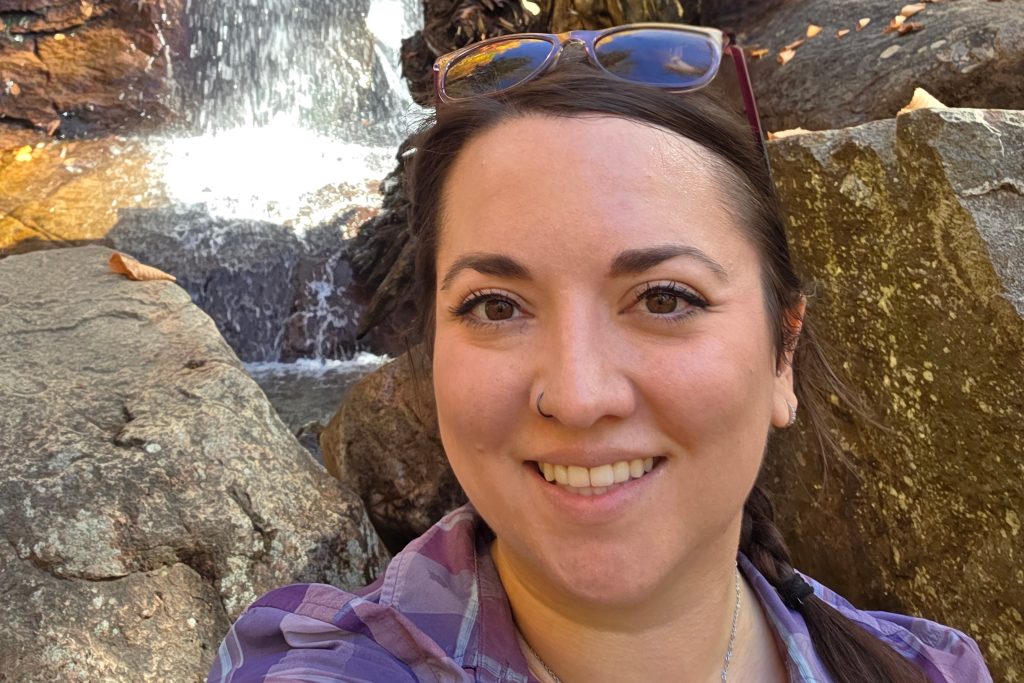
- What do you do?
I’m a biologist who primarily works in the field doing species surveys, but I also do a bunch of desk work, including desktop screenings, reporting, and permitting. - Why did you choose a career in STEM?
Science is just so cool, and I have always had a love of the outdoors and the wildlife in it. - What do you love or what inspires you about your field?
Environmental biology is all about cycles and niches, and it’s always beautiful to see it in action during surveys or even in everyday life. Knowing these cycles need protection motivates me to do my job and do it well. - What has been the highlight of your career?
I got to work on a multi-year project doing wolverine occupancy studies in Northern Ontario by way of helicopters, and it was so rewarding seeing the results of the camera and hair traps we diligently set out every winter. Any project where I can see my contribution has had a positive impact makes me proud to be a part of it. - What do you look forward to in your career?
I look forward to growing in my career and shaping my knowledge with more experience, whether it be in the field or at a desk. - What do you hope for the future of STEM?
I hope to see STEM continue to become more inclusive to all individuals from all walks of life. - Can you share an example of a project or accomplishment that you are particularly proud of?
Our Environment team recently won work to conduct breeding bird surveys in Northern Saskatchewan. It was my first time contributing to a proposal, and the turnaround from the RFP was short, but despite the challenges, we still won the work. - What challenges have you faced as a woman in STEM, and how have you overcome them?
Women in STEM often face more pushback and are not seen as being as knowledgeable as their male counterparts, but I have found that patience, resolve, and a good sense of humour can often overcome such prejudices. - What advice would you give to young women and girls interested in pursuing a career in STEM?
Do it and do it with zeal. Don’t let someone dampen your spark for science and technology! - How do you stay motivated and passionate about your work in STEM?
Stepping back and participating in nature, whether it be hiking, gardening, or birding, and appreciating what we have around us keeps me motivated and passionate about my work. - Who has been a significant mentor or role model for you in your STEM journey, and why?
Steve Irwin has always been a role model, especially to my younger self. He was so knowledgeable and earnest in his love for wildlife and worked to share that passion with the world, which inspired me and my love of biology.
More personally, there have been a number of people in my life who have shown me a great deal of patience and mentorship to get me where I am, some of whom I still get to work with today. I’m forever grateful for their guidance and for sharing their knowledge with me.
Julie Burghardt, MSc (Eng) PEng – Senior Environmental Engineer
- What do you do?
I am a Senior Environmental Engineer with the Site Assessment and Remediation team in Calgary. - Why did you choose a career in STEM?
As a kid, I always gravitated towards math and science in school. I had older cousins who were engineers, and they made it sound cool. - What do you love or what inspires you about your field?
What I love most about my field is the opportunity to solve complex problems for our clients. Environmental site assessment is inherently challenging because you are never 100% certain about what is happening in the subsurface. Every project is like piecing together a puzzle with incomplete information. That uncertainty is what makes the work both intellectually stimulating and rewarding. - What has been the highlight of your career?
It’s tough to choose just one! Recently, I’ve really enjoyed mentoring and coaching our junior staff. It’s been a highlight for me. It’s rewarding to pass on the technical knowledge that was shared with me earlier in my career. - What do you look forward to in your career?
I look forward to continuing to advance my technical knowledge and skills and having the opportunity to work on complex and challenging contaminated sites. - What do you hope for the future of STEM?
I hope the future of STEM is more inclusive, supportive, and representative of women at all levels. - Can you share an example of a project or accomplishment that you are particularly proud of?
I am particularly proud of projects where we’ve been asked to help a small private landowner facing an unexpected environmental issue they didn’t even know existed. These situations are often very stressful for them, as they’re worried about high costs that they can’t afford.
It’s especially rewarding to help turn what feels like an overwhelming situation into a manageable one while still meeting their environmental obligations. - What challenges have you faced as a woman in STEM, and how have you overcome them?
Managing and juggling work-life balance, especially as a mom of two young kids. Balancing the demands of a technical career with family responsibilities can be overwhelming at times.
I’ve worked to overcome this by setting clear boundaries, staying organized, and giving myself grace during busy periods. I’m fortunate to work for a company that genuinely supports work-life balance and understands the realities of parenting. - What advice would you give to young women and girls interested in pursuing a career in STEM?
Believe that you are capable and that you belong. - How do you stay motivated and passionate about your work in STEM?
I always try to keep on top of new and emerging technologies and industry practices by reading journals and taking technical courses. - Who has been a significant mentor or role model for you in your STEM journey, and why?
Over my career, I’ve had the opportunity to work with and learn from so many talented, experienced, and highly respected engineers and scientists. It’s these people who have made me who I am today, and I am incredibly grateful for their willingness to pass on their knowledge to me.
I now hope to do the same for new STEM graduates entering the industry.
Karla Hopp, MSc PEng – Systems Architect/Software Engineer
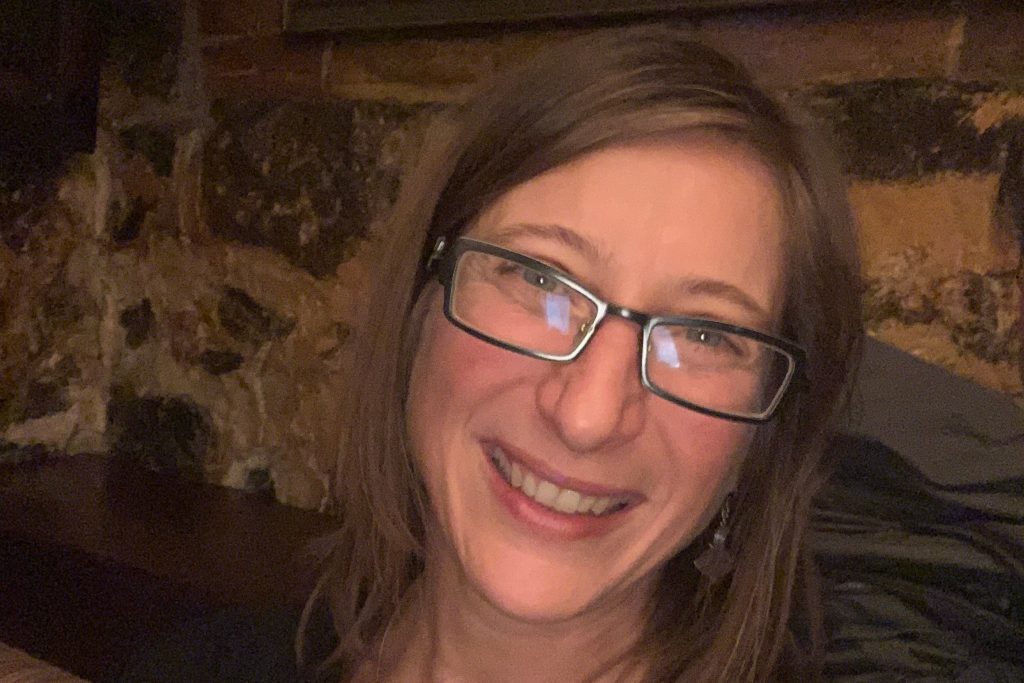
- What do you do?
An engineering firm handles a lot of data these days. My role starts with facilitating the collection of that data and ends with transforming it into meaningful information to help our leadership team make decisions. - Why did you choose a career in STEM?
Physics was my favourite subject, so when two enthusiastic engineers gave a talk at my high school about engineering being the application of science, it seemed like a good choice. However, my grandmother thought I was going off to Montreal to learn how to drive trains. - What do you love or what inspires you about your field?
I really love solving technical problems. - What has been the highlight of your career?
Working in Kuwait on a project funded by the United Nations to study the environmental impact of the first Gulf War. Not only was this a huge challenge, but the experience of living and working in such a different culture was fascinating! - What do you look forward to in your career?
The challenges and opportunities presented by AI. - What do you hope for the future of STEM?
I hope that young people will embrace the necessity of understanding the principles of math and science. We are in an era where there is a lot of temptation to offload this cognitive effort to AI. - Can you share an example of a project or accomplishment that you are particularly proud of?
After finishing a master’s degree in theoretical physics, I worked at the Canadian Light Source synchrotron on the biomedical beamline. The beamline construction was very behind schedule, and most of the researchers who had initially supported it had taken their research programs (and funding) elsewhere.
I built a vibrant academic and industrial research community for the beamline. This really challenged me to call on a wide range of skills and to step far out of my comfort zone. - What challenges have you faced as a woman in STEM, and how have you overcome them?
I’ve worked in countries with quite male-dominated cultures (Panama, Colombia, Kuwait, the Democratic Republic of the Congo). The men with whom I worked tended to discount me at first, to assume that being female meant that I wasn’t capable.
As a foreigner, it would have done nothing to tell them that they were wrong, so I just tried to patiently demonstrate that this wasn’t the case. Over time, their attitudes changed drastically, and we developed great working relationships. - What advice would you give to young women and girls interested in pursuing a career in STEM?
Any learning requires patience and hard work. Everyone needs to put in time and effort to master a subject, be it quantum mechanics or playing the piano. Don’t be afraid of the work or be influenced by the notion that women are somehow “no good” at math and science. - How do you stay motivated and passionate about your work in STEM?
I try to seek out new challenges in both my professional and personal life. Learning something new makes me feel alive! - Who has been a significant mentor or role model for you in your STEM journey, and why?
My high school math and computer science teacher, Barry Muir, had an enormous impact on my path in life. He took the time to keep me challenged and engaged, especially in math. He also ran the outdoor education club, which awoke in me a lifelong love of nature and outdoor sports.
Lindsay Radchenko, BASc – Environmental Scientist
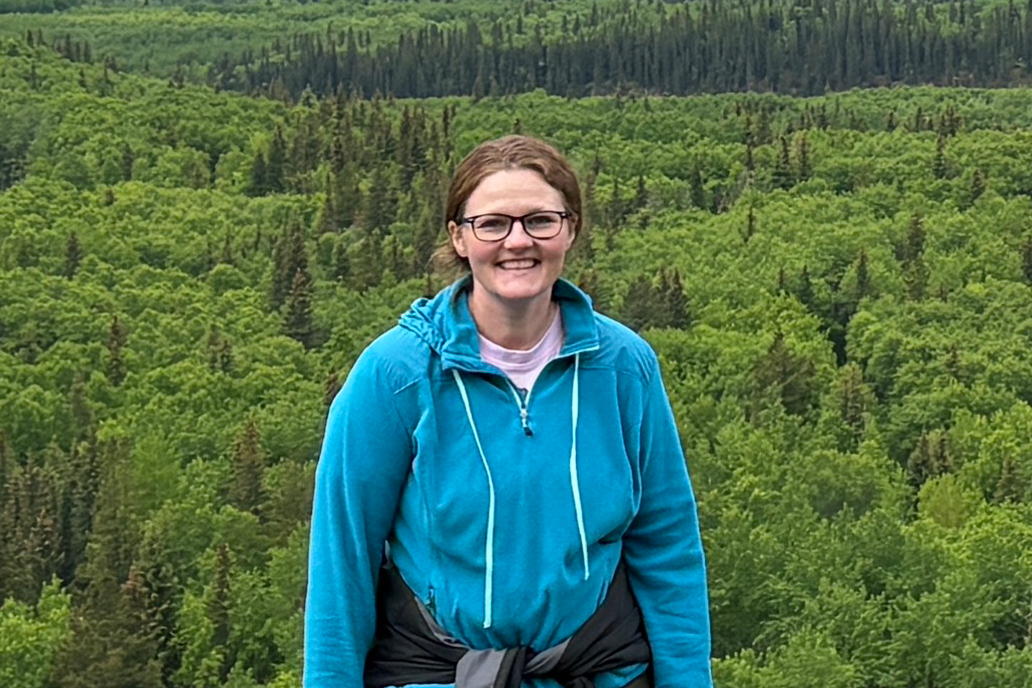
- What do you do?
I prepare regulatory permit applications and environmental impact assessments for various projects and developments in Saskatchewan. I also have several years of experience in contaminated site assessment and remediation. - Why did you choose a career in STEM?
I’ve always been interested in science, environmental protection, and sustainability. - What do you love or what inspires you about your field?
I’ve been in consulting my entire career, and I really enjoy the broad variety of projects I get to work on. - What has been the highlight of your career?
There have been a couple of substantial projects that have had a lengthy regulatory review process (spanning several years). Seeing these cross the finish line has been one highlight for sure. - What do you look forward to in your career?
The advancement of nuclear power in our province. - What do you hope for the future of STEM?
I hope that our youth continue to pursue careers in STEM and make lasting and positive impacts on society. - Can you share an example of a project or accomplishment that you are particularly proud of?
There are a lot of different projects I am proud of, but the lasting relationships I have made along the way with my colleagues and clients are what stand out for me. - What challenges have you faced as a woman in STEM, and how have you overcome them?
As a mom of three young children, there is always a balancing act between the demands of work and family. For me, this can often mean working strange hours to meet deadlines, but I am grateful that I have an employer that is flexible and allows me to manage both responsibilities. - What advice would you give to young women and girls interested in pursuing a career in STEM?
Be curious and don’t be afraid to ask questions. - How do you stay motivated and passionate about your work in STEM?
New innovations and technology, and there are always a variety of different projects (and challenges) that keep things interesting. - Who has been a significant mentor or role model for you in your STEM journey, and why?
My mom was always a very determined woman who wasn’t afraid to try new things. She supported my decision to pursue a science-based post-secondary education and was always my biggest cheerleader.
At Clifton, I’ve had the privilege of working alongside Mark Wittrup. Mark has decades of experience and is a trusted advisor who has provided me with practical insight and thoughtful guidance.
Ozlem Ozmen, PhD PE PEng – Principal Transportation Engineer
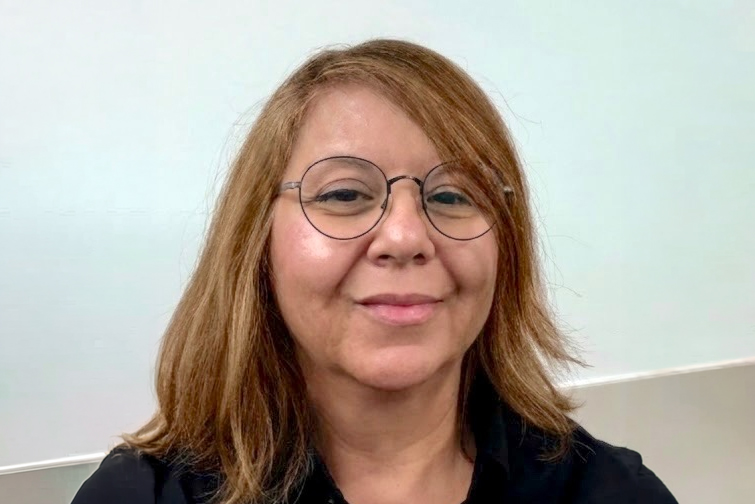
- What do you do?
I am a Principal Transportation Engineer. - Why did you choose a career in STEM?
As a child, I was captivated by space and dreamed of becoming an astronaut. That early sense of wonder and curiosity about the universe drew me toward STEM. - What do you love or what inspires you about your field?
I love that my work is tangible. There is something deeply satisfying about knowing that the infrastructure I build connects communities, improves lives, and will outlast me by generations. - What has been the highlight of your career?
The greatest highlight of my career has been earning my Ph.D. in Civil Engineering. - What do you look forward to in your career?
I look forward to seeing how emerging technologies will transform transportation engineering. - What do you hope for the future of STEM?
I hope that the future of STEM is one where young women see themselves fully represented and know that there is a place for them in these fields, because when we invest in women in STEM, we invest in a better, more innovative world for everyone. - Can you share an example of a project or accomplishment that you are particularly proud of?
One accomplishment I am particularly proud of is my work on the Federal Highway Administration’s Long-Term Pavement Performance project, a nationally significant research initiative that has advanced our understanding of how pavements perform over time and informed transportation infrastructure decisions across the country. - What challenges have you faced as a woman in STEM, and how have you overcome them?
Like many women in STEM, one of my greatest challenges has been balancing the demands of motherhood with a rigorous professional career. I overcame it by leaning on a strong support network and staying focused on my goals. - What advice would you give to young women and girls interested in pursuing a career in STEM?
Never let anyone make you feel like you do not belong in this field. Be curious, be persistent, and do not be afraid to take up space! - How do you stay motivated and passionate about your work in STEM?
I stay motivated by remembering the real-world impact of my work. Every project is an opportunity to improve how people move through the world. - Who has been a significant mentor or role model for you in your STEM journey, and why?
My uncle, a mechanical engineer, was my first real role model in STEM. As a child, I thought he was the coolest person. He showed me, before I had the words for it, that engineering was something I could pursue too!
Rayna Belyk-Kaytor, PEng – Director, Civil Engineering
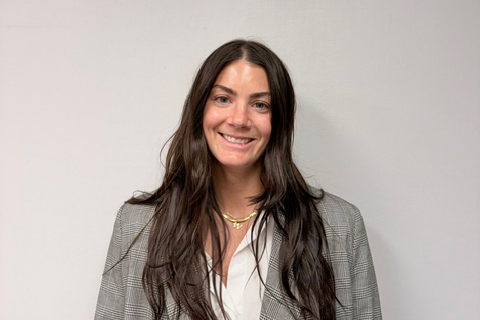
- What do you do?
I am the Director of the Civil Engineering Group at Clifton. My role is to lead the team, oversee projects, manage personnel, be responsible for technical development, and support organizational strategic direction. - Why did you choose a career in STEM?
I was strong in math and science, and honestly, I wasn’t sure what path to take. My grandfather encouraged me to look at engineering, and even though I didn’t know much about it at the time, I trusted his opinion. Once I got into it, I found a field that challenged me in ways I hadn’t expected. - What do you love or what inspires you about your field?
What I love most about engineering is that no two projects are ever the same. It keeps you constantly thinking critically and problem-solving in new ways. I also love the collaborative nature of the work. Civil engineering touches so many disciplines; I regularly work alongside geotechnical and environmental specialists, technologists, and professionals from other disciplines, and I learn something new from every one of them.
My role leans more towards leadership and project management than technical design, and that has taught me to deeply appreciate the expertise of the people around me. There is also something to be said for the respect that comes with being an engineer. I am proud to hold that title, and even prouder to hold it as a woman in STEM. - What has been the highlight of your career?
My career highlight isn’t tied to a specific project but to people. When I was a manager, two of my staff came to me and shared that they were ready to step into management themselves. Rather than holding onto two of my hardest-working team members, I prioritized helping them get there. I shared job postings, reviewed their résumés, helped them prepare for their interviews, and practised with them.
It wasn’t easy knowing I’d eventually have to replace them, but they were ready, and that mattered more. Both of them went on to land management roles and are thriving today. That’s the moment I am most proud of. Not because of anything I built, but because of what they built, and knowing my leadership had a small part in that. - What do you look forward to in your career?
What I look forward to most is the opportunity to do it again. Helping my former staff reach their goals was one of the most rewarding experiences of my career, and it reinforced for me that mentoring and developing the next generation of engineers and technologists is where I find the most meaning.
As a director, I hope to continue creating those moments, recognizing when someone is ready for their next step, and doing what I can to help them get there. If I can play even a small role in shaping the careers of future engineers or technologists, especially young women entering the field, that’s something worth showing up for every day. - What do you hope for the future of STEM?
Of course, I hope to see more women enter STEM, but more than the numbers, I hope for a shift in confidence. I hope young women stop waiting until they feel fully ready, stop second-guessing whether they belong, and start believing that leadership is attainable for them too.
I’ve felt that self-doubt myself, even in my director role, so I know how real it is. What I hope for is a future where women in STEM don’t just show up, but they lead, they stay, and they know they’re capable of doing hard things. - Can you share an example of a project or accomplishment that you are particularly proud of?
One of my proudest accomplishments is something I almost didn’t pursue: stepping into leadership early in my career. I didn’t necessarily see it in myself at first. I was encouraged to apply, and I took that leap.
Now being in a director role in a field like civil engineering is something I’ve had to learn to own. I have, on many occasions and still today, struggled with imposter syndrome. What keeps me grounded is knowing that the people who truly know me have confidence in me, and I have learned to borrow that confidence on the days I don’t have enough of my own.
I think that’s an important thing for women to hear: you don’t have to feel ready. Sometimes you just have to trust the people who see something in you and go for it. - What challenges have you faced as a woman in STEM, and how have you overcome them?
My biggest challenges have come from being a young leader in a field where experience is deeply respected. I have always seen people in leadership roles as being the ones with all the answers. Being in one of these roles, I feel I should know more than I do.
I have learned over the years that leadership isn’t about having all the answers; it’s about knowing how to find them and not letting fear stop you from doing that. - What advice would you give to young women and girls interested in pursuing a career in STEM?
I think my advice would be to try hard things before you are ready; you will eventually figure it out. I did not fully know what engineering was when I first pursued it, and I didn’t feel ready when I was encouraged to apply for a leadership role, but I did it anyway. Those two decisions have completely shaped my career. - How do you stay motivated and passionate about your work in STEM?
I stay motivated by the people around me. Being able to watch my team grow and develop in their careers is genuinely rewarding. Leadership at this stage also comes with its own challenges, and that pressure pushes me to keep improving.
I’m fortunate to have a supportive manager, and that kind of mentorship from above reminds me how much it matters to pass that same support down to my team. - Who has been a significant mentor or role model for you in your STEM journey, and why?
My most significant mentor was my former boss, who I worked alongside for over seven years. From early on, he recognized something in me that I hadn’t yet seen in myself. He was the one who encouraged me to apply for a leadership role.
Even when the director opportunity at another company came along, he was the first person I called. He never once tried to hold me back. What made him exceptional wasn’t just his belief in my abilities; it was the relationship we built. He gave feedback in the moment, he challenged me, and he created a space where I felt safe enough to bring my whole self to work.
He modelled what true leadership looks like, and every day in my own role, I try to live by the values he demonstrated. I hope to be for someone else what he was for me.
